The wedding day run sheet for videographers
Photographers plan where to stand. Videographers plan where to stand, what's recording, and whether the audio is safe - here's the run sheet that covers all three, with a free template.
Last updated: August 23, 2026
Why the photographer's timeline isn't enough
A wedding videographer runs three schedules at once: coverage (where you and your cameras are), audio (what's miked and recording), and media (which cards are full, which batteries are dying). The planner's timeline tracks none of these, and even a good photographer's run sheet only tracks the first. Film a season from someone else's schedule and the failure mode is always the same - the picture was fine, and the audio wasn't there.
The run sheet below (in the US you'd call it a wedding day timeline) adds the blocks that only exist for video: mic-up windows, the ceremony rig, offload points, and the handshakes with the photographer that keep two crews out of each other's frames.
The four fixed points of a video day
- The ceremony rig. A multi-cam ceremony with clean audio needs 30-45 minutes of setup before guests are seated. This block doesn't exist on anyone else's timeline - put it on yours or lose it.
- Audio moments. Vows, letters, toasts. Each needs a mic decision made in advance and redundancy running. These happen once.
- Sunset. Golden hour is the light your highlight film ends on. If it collides with dinner, negotiate the ten-minute exit at the consult, not on the day.
- Offload windows. Cocktail hour and dinner are when cards get duplicated and batteries cycle. Rolling cameras eat both faster than any photo kit.
A realistic 8-hour run sheet (4:00 pm ceremony)
Single venue, first look, 4:00 pm ceremony, sunset around 7:45 pm - the same working day as our photographer's run sheet, seen from behind the video cameras. If you're a photo + video team, run the two side by side: same blocks, different jobs.
| Time | Block | Your job | Notes |
|---|---|---|---|
| 12:30 | Arrive + establishing shots | Venue exteriors, establishing b-roll, drone establishing if permitted. | Check drone rules and airspace the week before - not on the day. |
| 13:00 | Getting ready | Details in motion, candid b-roll, the letter reading with clean audio. | Lav mic plus backup recorder on the letter reading; grab room tone. |
| 14:00 | Dress on | Reactions on the long lens, second angle on parents. | Agree corners with the photographer - stay out of each other's frames. |
| 14:30 | First look | Two angles: one static, one moving. Choreography agreed with photo. | Mic the couple if you want their words in the film. |
| 15:15 | Formals window | B-roll and cutaways of the bridesmaids and groomsmen. | Formals are photo-led - shoot around them without directing. |
| 15:20 | Ceremony rig | Static cameras, tripods, audio into the officiant and PA. | Lav the groom and officiant now; test levels; backup recorder at the altar. |
| 16:00 | Ceremony | A-cam on the couple, B-cam static wide, C-cam on guests. | Audio redundancy running. Never reposition during vows. |
| 16:30 | Cocktail hour | Guest soundbites if planned, venue b-roll. | First card offload of the day - two copies before you relax. |
| 17:15 | Couple session | Directed movement: walking, turning, close moments. | Movement reads better than posing on video - brief the couple. |
| 18:00 | Entrances + first dances | Two angles plus clean board audio. | Get a feed from the DJ board or mic the speakers. |
| 18:30 | Dinner + toasts | Soundboard audio plus reaction cutaways. | Toasts are audio-critical - run redundancy again. |
| 19:00 | Golden hour | Ten minutes for the closing shots of the highlight film. | Protect this slot with the planner and the photographer. |
| 19:45 | Dance floor | Wide plus tight coverage, on-camera light. | Swap batteries on the static cams before this block. |
| 20:30 | Send-off | Slow-motion exit, then a final night exterior of the venue. | The night establishing shot makes a closing frame. |
Download this template as a CSV - it opens in Google Sheets, Excel, or Numbers, and it's yours to edit. No email required.
Working alongside the photographer
Most video-day friction isn't technical - it's two crews improvising around each other. Three agreements, made before the day, remove most of it:
- Who leads which block. Formals are photo-led; you shoot cutaways. The couple session gets split so video directs real movement instead of filming poses from the side.
- Frame corners. Agree standing zones for the ceremony and first dance in advance - static video cameras can't dodge a photographer who drifts.
- One master timeline. Same blocks, two job columns. Separate timelines drift; a shared one keeps both crews pointed at the same minute.
The five mistakes that break a video day
- No rig block. If ceremony setup isn't scheduled, it comes out of the formals window - or out of your audio checks.
- Single-point audio. One lav, no backup recorder. The vows are the one take you can't ask for again.
- No offload discipline. Two copies of every card before you relax at cocktail hour, every time.
- Treating the photographer's timeline as yours. It has no rig time, no mic windows, no battery cycles.
- Promising drone shots unconditionally. Weather, airspace, and venue policy all get a vote. Sell it as a bonus.
Common questions
How is a videographer's run sheet different from the photographer's?
Three things exist on yours that don't exist on theirs: audio capture windows (mic-up slots for the groom, officiant, and letter readings), rig time (a multi-cam ceremony needs 30-45 minutes of setup before guests are seated), and media logistics (offload and battery windows for cameras that never stop rolling). A photographer can arrive at a block and start shooting; you often need to have been there half an hour earlier.
When should I mic the groom and officiant?
During the ceremony rig window, before guests are seated - typically 30 to 45 minutes ahead. Test levels then, not during the processional, and run a backup recorder at the altar. Vows only happen once.
Should photo and video share one timeline?
One master timeline, yes - agreed with the planner - with each crew knowing its own jobs per block. The two failure modes are separate timelines that drift out of sync, and no agreement about who leads which block: formals are photo-led (you shoot cutaways), the couple session needs a split so video gets directed movement, not just the photographer's poses from a second angle.
When do drone shots fit into the day?
Two realistic windows: before the ceremony while you're shooting establishing coverage, and golden hour if the venue and light cooperate. Confirm the venue's drone policy and local airspace rules the week before - never on the day - and treat the drone as a bonus, not a scheduled deliverable the couple is promised.
Do I need a run sheet for a small wedding or an elopement?
A shorter one, yes. Audio still has to be rigged before the vows, sunset math still decides your closing shots, and cards still need two copies before you relax - none of that cares how many guests there are.
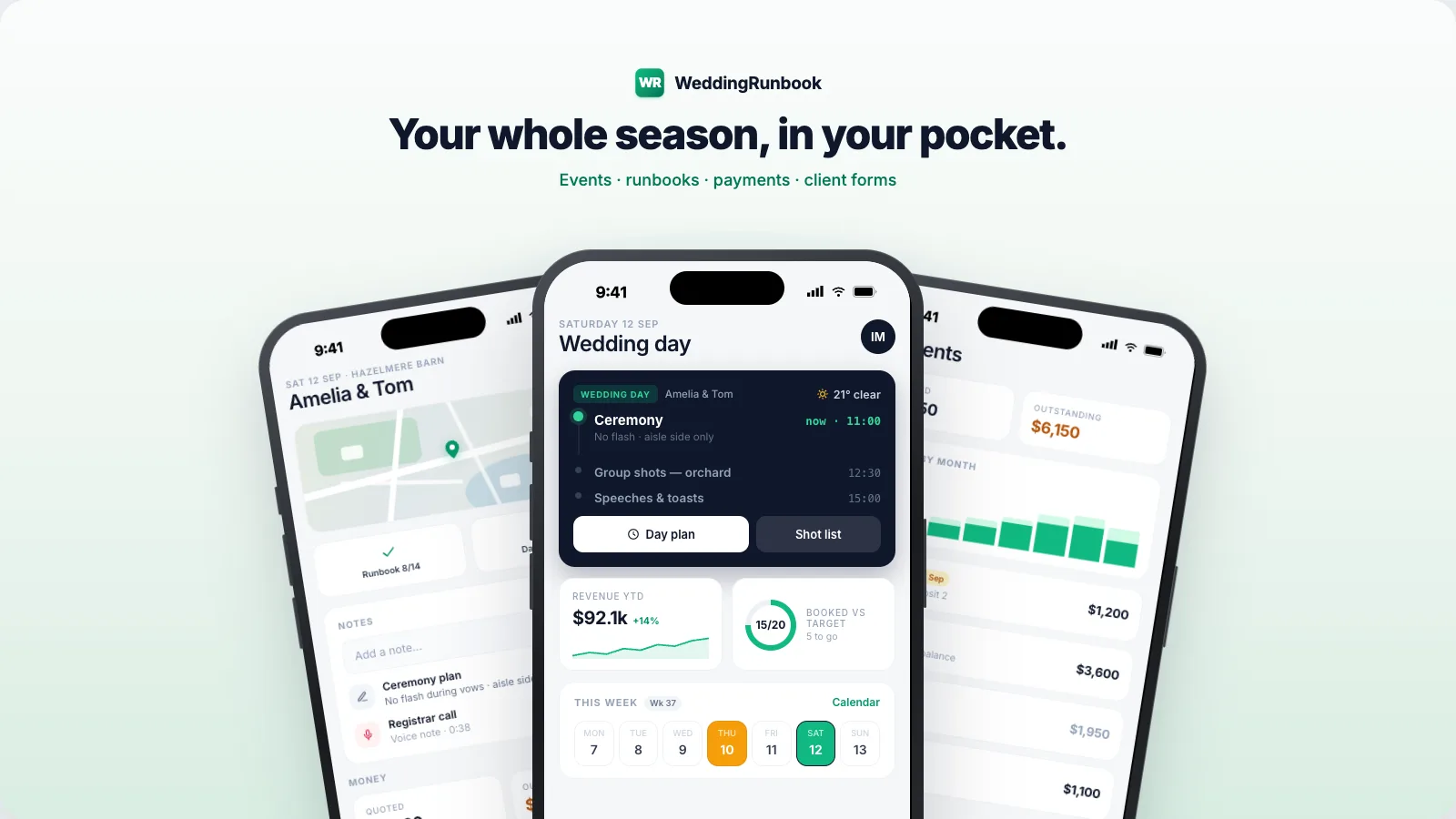
One run sheet is a day. WeddingRunbook is the whole season.
WeddingRunbook is calendar-first software for wedding photographers and videographers - solo or as a team. Every wedding follows the same lifecycle from inquiry to delivery, with deadlines, tasks, and the wedding day on one calendar. Free for 14 days, then $9 a month or $90 a year - one plan, everything included. The client portal - galleries, chat, e-signed contracts, quotes, invoices, questionnaires - is live, with 20 GB of galleries included, and the iOS app is in beta.
Start your season14-day free trial - no card required.